
Medications for
Alcohol Use Disorder:
What Works and Why
There isn’t one “best” medication.
The right choice depends on you.
Several FDA-approved and off-label medications can help reduce cravings, support control, and make it easier to stay on track. This article explains the main options, how they work, and why one medication may fit a person better than another.
The Short Answer
Several medications can be effective for alcohol use disorder. They work in different ways, and the best option depends on your goals, medical history, response to treatment, and what fits into your life.
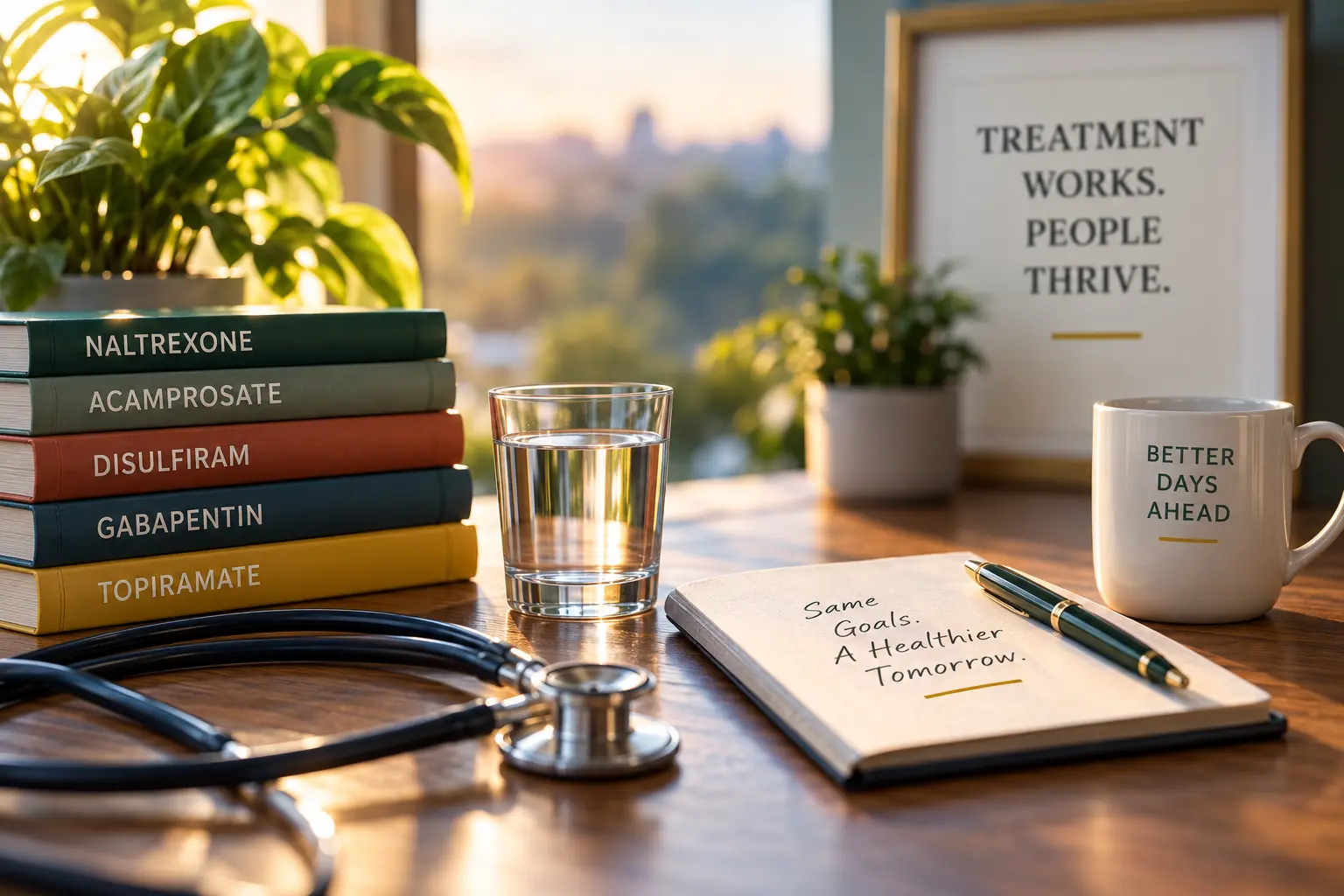
The Medications We’ll Cover
Each medication works differently. The goal is not simply to prescribe something—it is to find the option that makes the most sense for the individual patient.
Naltrexone
Oral medication that can help reduce cravings and the rewarding effects of alcohol.
Vivitrol®
Long-acting injectable naltrexone given monthly.
Acamprosate
Can help support stability after alcohol has been stopped.
Disulfiram
Creates a strong deterrent to drinking alcohol.
Gabapentin
May help with cravings, anxiety, sleep, and some withdrawal-related symptoms.
Topiramate
May help reduce alcohol cravings and drinking.
How Each Medication
Works — and Why It’s Used
Each medication works in a different way. The right choice depends on your goals, drinking pattern, medical history, and what fits into your life. There isn’t one “best” option — there’s a best option for you.
“The medication should fit the patient — not the patient fit the medication.”— James B. Watson, DO
Naltrexone Oral Medication
Blocks opioid receptors involved in alcohol's rewarding effects, which can help reduce cravings and heavy drinking.
- Taken by mouth daily
- Well studied for alcohol use disorder
- Can be a good option for many patients
Vivitrol® Monthly Injection
Extended-release naltrexone given as a monthly injection. It provides the same medication without requiring a daily pill.
- Given once a month
- No daily pill
- Can help maintain consistent medication coverage
Acamprosate Supports Stability
Helps support changes in brain signaling that may remain disrupted after prolonged alcohol use and is commonly used to help maintain abstinence.
- Taken by mouth, usually three times daily
- Does not block alcohol's effects
- Often used after alcohol has been stopped
Disulfiram Creates a Deterrent
Interferes with alcohol metabolism and can cause an unpleasant reaction if alcohol is consumed. It does not directly reduce cravings, but it can act as a deterrent.
- Taken by mouth daily
- Works as a deterrent to drinking
- Requires commitment to avoiding alcohol
Gabapentin May Reduce Cravings
Originally developed for seizures and nerve pain, gabapentin is sometimes used off-label for alcohol use disorder and may help with cravings, anxiety, and sleep in some patients.
- Taken by mouth
- May help with anxiety and sleep
- Used off-label for alcohol use disorder
Topiramate May Help Reduce Use
Topiramate is sometimes used off-label for alcohol use disorder and may help reduce cravings and drinking in some patients.
- Taken by mouth
- May help reduce drinking over time
- Used off-label for alcohol use disorder

Which Medication Is Right for Me?
The best medication depends on several factors, including:
There’s no single “right” answer. The goal is to find an approach that helps you gain control, feel better, and move forward with your life.
The Bottom Line
Medications are tools — not a cure. They can reduce cravings, support stability, and make it easier to stay in control, especially when combined with counseling and ongoing physician follow-up.
A Few Questions People Commonly Ask
Here are brief answers to some of the most common questions about medications for alcohol use disorder.
Is naltrexone better than the other medications?
Not necessarily. Naltrexone works well for many people, but it isn’t the right choice for everyone. The best medication depends on your goals, medical history, drinking pattern, and how you respond.
Learn more →Can I take these medications with counseling?
Yes. Medication can help reduce cravings while counseling can help you build new skills, manage triggers, and make changes that support long-term stability.
Learn more →How long will I need to stay on medication?
There’s no set time. Some people use medication for a few months, while others benefit from longer-term treatment. The decision should be individualized and based on progress, goals, and ongoing risk.
Learn more →Are these medications safe?
For many people, yes. These medications are generally well tolerated when appropriately prescribed and monitored. Like all medications, they can have side effects and are not right for everyone.
Learn more →Want to Go Deeper?
Here are some authoritative resources if you’d like more detailed information.
Alcohol Use Disorder Practice Guidance
Evidence-based recommendations and clinical information for the treatment of alcohol use disorder.
Explore ASAM resources →Alcohol Treatment Navigator
Research-based information on treatment options, medications, counseling, and support resources.
Explore resources →Medications for Alcohol Use Disorder
Learn about FDA-approved medications used in the treatment of alcohol use disorder, including naltrexone, acamprosate, and disulfiram.
Visit the FDA website →Continue Learning
Explore the next articles in our alcohol use disorder series.

Counseling Options Beyond 12 Steps
AA is one option. Learn about other evidence-based approaches to counseling and support.
Read the next article →
Why Treatment After Alcohol Detox Matters
Detox gets you through withdrawal. Learn why continuing care can help reduce relapse risk and support longer-term control.
Read the article →