

Buprenorphine Induction: Myths vs. Medicine
Dr. Watson addresses common myths about starting buprenorphine, including timing and precipitated withdrawal.
Starting Buprenorphine (Suboxone) Safely
Buprenorphine induction is the process of taking your first doses of buprenorphine after stopping other opioids.
The goal is simple: start buprenorphine at the right time so that it relieves withdrawal rather than making withdrawal worse.
With a traditional induction, you generally wait until you are experiencing clear opioid withdrawal symptoms before taking your first dose. Starting too early can cause precipitated withdrawal, particularly when fentanyl or other long-acting opioids are involved.
This guide explains how to recognize when you may be ready, how the induction process works, and what to watch for after your first dose.
What Is Precipitated Withdrawal?
Buprenorphine binds very strongly to opioid receptors. If it is started too soon after other opioids, it can rapidly displace those opioids and trigger a sudden worsening of withdrawal symptoms. This is called precipitated withdrawal.
How to Reduce the Risk of Precipitated Withdrawal
• Wait for clear withdrawal symptoms: The safest time to begin a traditional buprenorphine induction is based on your withdrawal symptoms—not simply the number of hours since your last opioid.
• Start with the dose prescribed for your induction: Follow the induction plan you discussed with your physician.
• Reassess before taking more: After the initial dose, allow time to see how your symptoms respond before taking the next dose.
When induction is timed correctly, buprenorphine should begin relieving withdrawal symptoms rather than making them worse.
Timing Is Key — But Symptoms Matter More
Fentanyl and newer opioid-like products have made buprenorphine induction less predictable. A fixed number of hours after your last use does not necessarily mean you are ready to begin.
• Fentanyl Is Unpredictable: There is no single number of hours that guarantees you are ready to start buprenorphine.
• Look for Opioid Withdrawal: Clear signs of opioid withdrawal are more important than simply watching the clock.
• Kratom, 7-OH & “Gas Station” Products: Concentrated kratom extracts, 7-hydroxymitragynine (7-OH), and other opioid-like products may have different or uncertain durations of effect. Product contents and potency can also vary.
• Today’s Drug Supply Is Often Adulterated: Other substances mixed with opioids may produce additional withdrawal symptoms that are not opioid withdrawal, making symptoms harder to interpret.
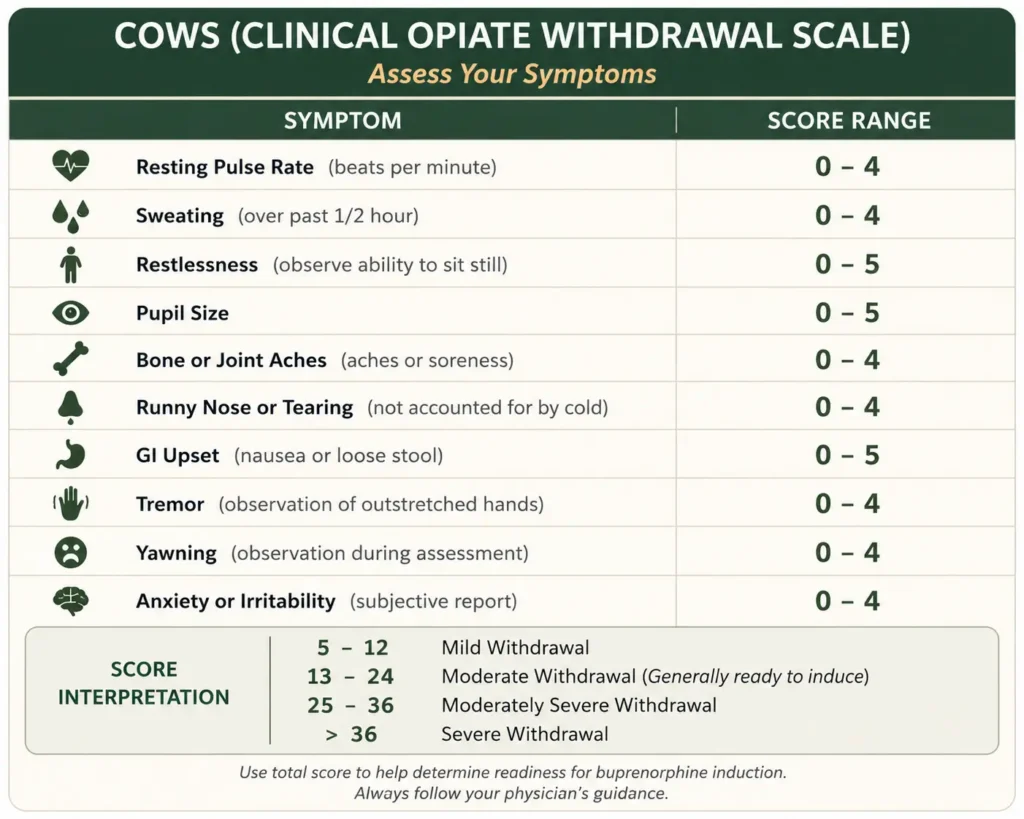
The COWS score provides a more objective way to assess opioid withdrawal and determine when you may be ready to begin induction.
Withdrawal symptoms—not simply time since your last use—are one of the best ways to judge when you may be ready to begin buprenorphine.
What Is the COWS Score?
The Clinical Opiate Withdrawal Scale (COWS) is a standardized tool used to measure the severity of opioid withdrawal. It looks at signs and symptoms such as sweating, restlessness, pupil size, aches, stomach symptoms, tremor and anxiety.
A higher COWS score indicates more significant opioid withdrawal. Clear moderate withdrawal is generally the goal before beginning a traditional buprenorphine induction.
Check Your COWS Score:

1. Stop Other Opioids: Do not take additional opioids while preparing for a traditional buprenorphine induction.
2. Wait for Withdrawal: The goal is to be clearly in opioid withdrawal before the first dose. Use your symptoms and COWS score rather than relying only on the number of hours since your last use.
3. Take Your Starting Dose: Begin with the amount Dr. Watson prescribed for your induction.
4. Reassess: Give the medication time to work and reassess your withdrawal symptoms before taking additional medication.
5. Follow Your Induction Plan: If your symptoms are improving, continue according to the dosing instructions you were given.
6. Continue Maintenance Treatment: Once stabilized, continue your prescribed buprenorphine dose and follow up as directed.
If you begin to feel worse after the initial dose, do not take more, as it can exacerbate your symptoms. The only cure for precipitated withdrawal is time.
Congratulations! You’re on your path to recovery. If you have any questions, Dr. Watson is just a call away.
Suboxone treatment is ideal for those seeking a convenient and effective opioid dependency treatment that can be managed at home.
Suboxone can be taken at home and focuses on improving your quality of life, unlike methadone, which requires daily visits to a clinic.
Yes, we also provide Zubsolv and various generic buprenorphine options.
Dr. Watson believes in direct physician care; the frequency of appointments will be personalized based on your treatment needs.
Cost varies depending on your treatment plan. Financial options are available to reduce burden.
For more information or to schedule an appointment, contact us today. Together, let’s take the first step toward a life of freedom and well-being.